Building demolition works in four stages: permitting and utility checks, mechanical teardown with heavy equipment, debris sorting and hauling, and final site grading. Most residential and small commercial teardowns finish in one to two days, with cleanup timing tied to how much debris comes down. Here’s what actually happens on site, step by step.
What Is the Building Demolition Process?
Building demolition is the planned takedown of a structure using heavy machinery, followed by debris removal and site grading. It differs from a controlled implosion (used mostly on large high-rises) because most projects — homes, barns, sheds, and commercial buildings — come down with excavators and skid steers rather than explosives.
For property owners in the San Antonio area, that distinction matters. Explosive demolition almost never applies to standard residential or commercial builds. What you’re really planning for is mechanical demolition, and the timeline, cost, and paperwork all follow from that.
The Question People Actually Search For
Question: How long does building demolition take? Answer: Most standard structures — houses, outbuildings, and small commercial buildings — come down in one to two days of active teardown. Debris hauling and final cleanup can add several more days depending on the volume of material and site access.
Before the Machines Arrive: Permits and Site Checks
No excavator should touch a structure before three things happen: permitting, utility locates, and a site walk.
Permitting in Texas
Texas cities and counties generally require a demolition permit before work starts, even on private property. Requirements shift by jurisdiction — some counties near San Antonio require less paperwork than the city itself — so confirming local rules first avoids a stop-work order mid-project.
Pro Tip: Pull your permit before you schedule equipment. Crews showing up to a site with no approved permit means a rescheduled job and a wasted day of mobilization costs.
Utility Locates and Environmental Checks
Before any excavator makes contact, crews call in utility locates for buried gas, water, and electrical lines. Older structures also get a quick check for asbestos or other hazardous materials, since those require special handling before mechanical teardown can start under OSHA’s demolition safety standards.
How the Teardown Actually Happens
Once permits and locates clear, the physical process follows a consistent order:
- Site staging. Equipment, fencing, and any needed shoring get positioned. Utilities to the structure are disconnected.
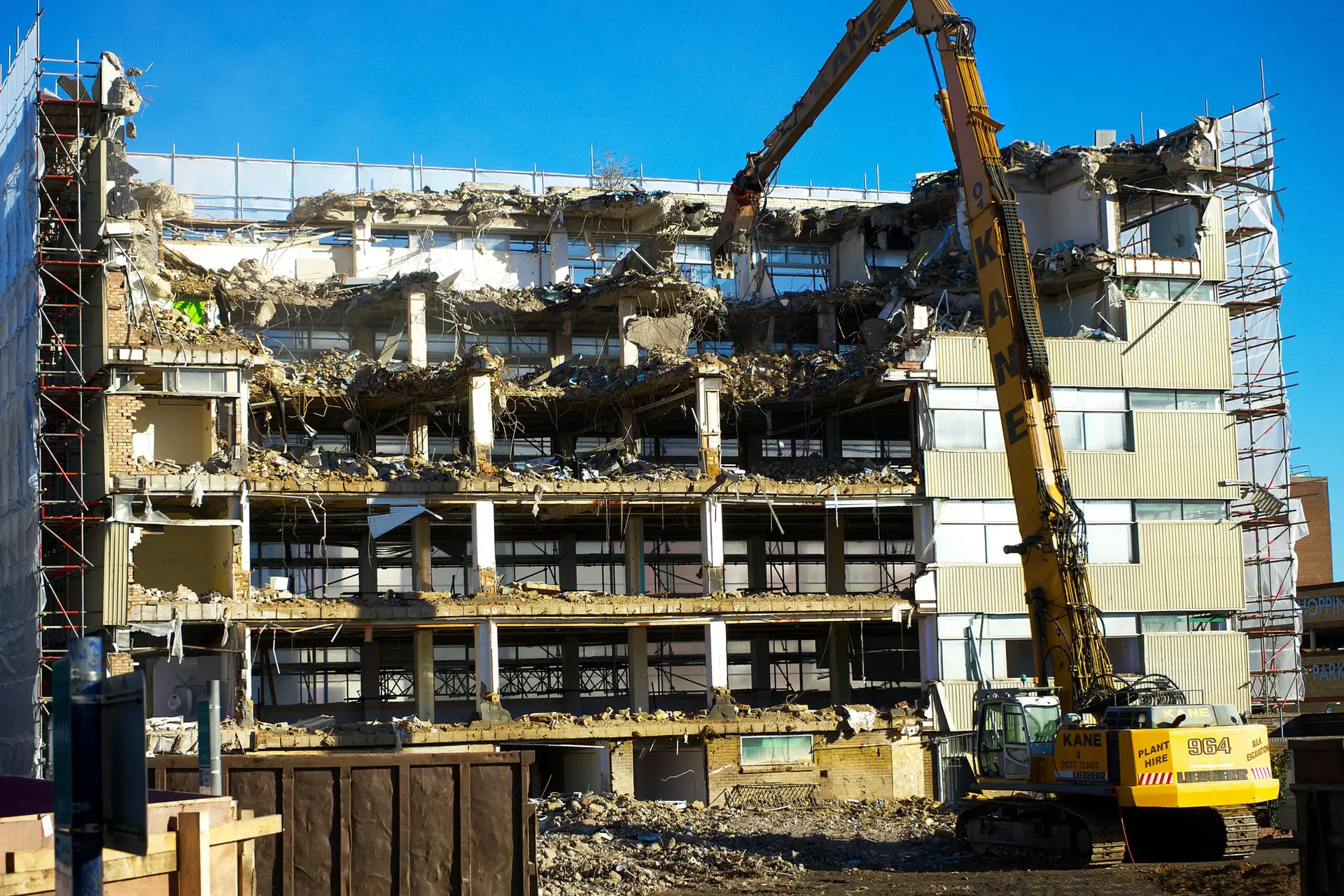
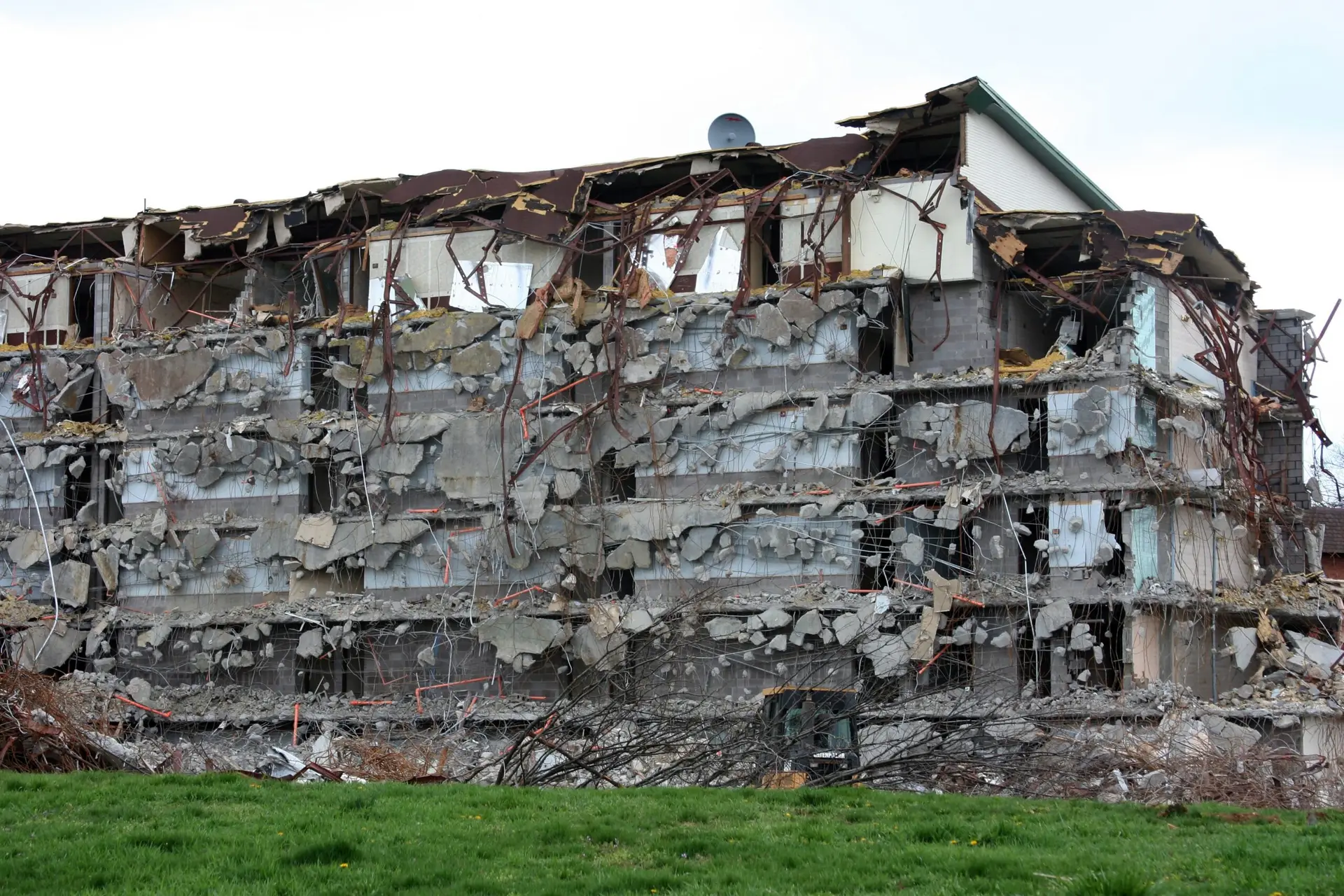
- Mechanical takedown. An excavator with a demolition attachment works the structure down in sections, starting from the roofline and working downward, rather than pushing walls over all at once.
- Debris separation. Concrete, wood, metal, and other material get sorted on site as they come down, which speeds up hauling and recycling later.
- Load-out and hauling. Sorted debris gets loaded onto dump trucks and hauled off site.
- Grading and cleanup. The pad is graded flat, leaving a clean, buildable surface.
Did You Know: A single residential teardown can generate anywhere from 20 to 100+ tons of debris, depending on square footage and construction materials. That volume is why load-out and hauling — not the actual knockdown — often takes up the bulk of a demolition timeline.
Why We Default to Excavators, Not Wrecking Balls
Most demolition content online still leans on wrecking-ball imagery, but that’s not how the vast majority of jobs actually get done anymore — and it’s worth explaining why.
An excavator with the right attachment gives a crew section-by-section control that a wrecking ball simply doesn’t offer. On sites near occupied neighbors, active roadways, or existing underground utilities — common across the San Antonio market — that control isn’t optional. It’s what keeps a teardown from turning into a liability claim.
There’s a second reason this matters for demolition services here specifically: a large share of our demolition work isn’t a standalone job. It’s the first phase of a larger site conversion — clearing an old structure so a property can move into land clearing, grading, or excavation for something bigger, from a commercial pad site to a solar development. When demolition is staged as step one of a longer build sequence, precision on the front end saves real time on the back end.
Pro Tip: If your teardown is the first step in a larger redevelopment, tell your contractor the end goal before demolition day. Grading and drainage decisions made during takedown can either simplify or complicate the excavation work that follows.
Where the Debris Actually Goes
This is the part most homeowners and developers don’t think about until the invoice arrives: hauling is often the single biggest line item in a demolition budget, not the teardown itself.
Once debris is sorted on site, it’s loaded and hauled by dump truck hauling crews to an approved disposal or recycling facility. Concrete and masonry frequently get crushed and reused as fill or base material rather than landfilled, which can reduce disposal costs on larger jobs.
Did You Know: According to EPA data on construction and demolition debris, a significant share of C&D material gets diverted away from landfills every year, largely through concrete crushing and metal recycling.
What Happens After Demolition
A cleared lot isn’t the finish line — it’s the starting point for whatever comes next. Depending on the project, that might mean excavation services for a new foundation, grading for drainage, or land clearing to prep acreage for agricultural or commercial use.
Property developers and landowners planning multi-phase projects benefit from treating demolition, hauling, and site prep as one continuous scope rather than three separate bids. It cuts down on remobilization costs and keeps the timeline tighter.
Building demolition is really four connected jobs — permitting, teardown, hauling, and site prep — not one. Understanding how those pieces fit together helps you budget accurately and avoid surprise costs once the structure is down.
Ready to plan a demolition project in the San Antonio area? Contact Global Contractors for a free on-site estimate, and we’ll walk your site with you before a single machine shows up.
Frequently Asked Questions
How long does it take to demolish a building? Most standard homes and small commercial buildings take one to two days for the actual teardown. Total project time, including debris hauling and grading, usually runs a few days longer depending on site size and material volume.
Do I need a permit to demolish a building in Texas? Yes, most Texas cities and counties require a demolition permit before work begins, even on private property. Requirements vary by jurisdiction, so it’s worth confirming with your local building department before scheduling equipment.
What happens to the debris after a building is demolished? Debris is sorted on site by material type, then hauled off by dump truck to an approved disposal or recycling facility. Concrete and metal are often recycled rather than landfilled, which can lower disposal costs.
Can demolition be combined with land clearing or excavation? Yes, and for larger or multi-phase projects it usually should be. Staging demolition as the first phase of a land clearing or excavation project keeps grading and drainage work consistent and avoids redoing site prep later.
Is a wrecking ball still used for building demolition? Rarely. Most modern demolition, including nearly all residential and small commercial jobs, uses excavators with specialized attachments instead. Wrecking balls are largely limited to certain large-scale or historical demolition scenarios.